
B2B distribution in Ukraine is rarely a question of gaining access to a market, though it is often approached that way. In most categories the country is already served by experienced importers, wholesalers, regional dealers, technical resellers and logistics operators. A manufacturer entering or expanding today is not opening an empty market, but deciding how to work within one that already functions. The harder question is how far to rely on that layer, and how much of the selling to delegate without giving up control of price, customers, service, cash and market information. Distribution here is a commercial operating decision, not a back-office matter of appointing an agent, and its quality decides whether rising volume strengthens the economics of the business or erodes them. What follows sets out how to build and govern such a channel, why partner fit matters more than partner size, and why the right degree of control depends on the category and the capital behind it, not on control for its own sake.
Why B2B distribution in Ukraine is not a blank-map exercise
A distribution strategy for Ukraine should start from a simple but often missed fact, that the market is already served, only unevenly. Most categories run on an established base of importers, wholesalers, specialised dealers and logistics operators, so the task is to decide where to build on that base and where to construct something more directly controlled. This is also a market that has kept trading and adapting rather than stalling under pressure. EBRD research published in 2025 found most Ukrainian SMEs in a cautious conservation mode, with the share intending to diversify or expand holding at around 14 per cent even on the assumption that the war continues. That evidence is not specific to distribution, but it reflects the wider mood, in which firms remain active and have grown more selective about the commitments they make.
Any realistic plan has to reckon with two features of that market. The first is that B2B distribution in Ukraine is not a single, uniform market. Building materials, industrial goods, machinery, chemical inputs and agricultural inputs each move through the channel differently, and a structure that suits one rarely transfers cleanly to another. The second, and the one more often missed, is that national coverage on paper is not the same as effective coverage in practice. Demand, risk and service intensity vary widely across Kyiv, the western regions, the industrial centre, the agricultural south and the areas near the front. It is usually this gap between claimed reach and real working coverage, not any shortage of partners, that explains why a distribution plan disappoints.
The control problem behind market access
Because capable partners already exist, the useful question is less who can sell the product than what a manufacturer keeps once the selling is delegated. The first exposure is price, since an independent distributor sets its own discounts, decides how to handle its largest buyers and shapes how the product appears online. A price position therefore has to be built into the arrangement, not assumed to survive it. Closely related is the ownership of customers, because once it is unclear which accounts belong to the manufacturer and which to the distributor, the most valuable relationships become the first source of conflict as volumes grow. Availability is a third exposure, since a partner that cannot fund or hold the right stock loses orders that never appear in any report. In technical categories the sale also depends on installation, spare parts and after-sales support that do not travel with the goods. Beneath this sits visibility, because without a reliable view of what is selling, where and at what price, a manufacturer loses sight of its own market as soon as the selling is delegated.
Choosing partners: role first, candidate second
Part of the difficulty is that the word distributor is used loosely in B2B. It can mean an importer of record, a wholesaler that carries stock and extends credit, a regional dealer, a technical reseller that both sells and services equipment, or a partner whose main value is access to particular accounts. These are different businesses with different economics, and treating them as interchangeable is a common reason a partner search disappoints. The more disciplined approach is to decide what role the channel needs to fill before assessing which companies could fill it, rather than starting from whichever distributor is best known.
Size, in this context, is a weaker guide than it first appears. The largest distributor is the most visible candidate, but visibility says little about category focus, management attention or any real intention to build the manufacturer's position rather than add one more line to a crowded portfolio. Fit is a more searching test, and it turns on whether a distributor truly concentrates on the category and whether its customers are the ones the manufacturer needs to reach. It also asks whether the partner has the sales capability, warehousing and credit discipline to grow the business rather than place opening orders. Harder questions follow about competing brands, the willingness to share data and the real commitment of the partner's owners.
Expectations around logistics have shifted in parallel, and they now shape the backdrop against which partners are judged. Reuters has reported that Nova Post, one of the country's largest private logistics companies, delivered a record 480 million shipments in 2024 and now moves more than 1.5 million parcels a day, keeping services running through blackouts and disrupted routes with generators and satellite links. Nova Post is not a distributor, and its performance says nothing about the quality of any particular partner. It has, though, raised the standard for reliability and continuity that Ukrainian business customers now expect, so distributors are judged against it as well as on the category knowledge, credit and technical support a parcel carrier never provides.
Designing coverage without losing control
Coverage is where an otherwise sound strategy most often comes apart, because the right structure depends heavily on the economics of the category. The service intensity of what is being sold does most of the work. Building materials need stock held close to demand, industrial products depend on technical selling and after-sales support, and equipment requires service, spare parts and installation. Fast-moving B2B goods turn instead on frequency and steady availability, while agricultural inputs are shaped by seasonality and the need for field support at particular points in the year. A model that ignores these differences and appoints one distributor for the whole country tends to serve some categories well and others poorly. The comparison below sets out the main options alongside what each solves, the control risk it carries and the demand it places on the manufacturer's balance sheet.
Coverage model | What it solves | Main control risk | Working-capital implication | Typical best fit |
|---|---|---|---|---|
Single national distributor | Fast national access through one relationship | Dependency on one partner and portfolio dilution | Low for the manufacturer | Fast-moving categories with simple service needs |
Regional distributor network | Local presence and stock close to demand | Inconsistent pricing and service between regions | Medium | Categories where regional availability matters, such as building materials |
Hybrid of distributors and direct key accounts | Reach for dispersed demand with control of strategic accounts | Channel conflict between direct accounts and distributors | Higher | Mixed portfolios with large accounts and dispersed demand |
Importer plus dealer network | Import handling combined with local coverage | Margin stacking and weak visibility of the end customer | Low to medium | Imported equipment, spare parts and technical goods |
Direct sales force | Maximum control of price, service and information | Limited reach and high fixed cost | Highest | High-value, technical or strategic products |
Source: UA Consulting analysis.
None of these structures is right or wrong in itself, and each earns its place only under particular conditions. A single national distributor can work well where the category is straightforward and service needs are light, but it should be a deliberate choice rather than a default, because it concentrates the manufacturer's whole position in one relationship. A regional network brings stock and local knowledge closer to the customer, yet it can just as easily produce uneven pricing and patchy service where partners are not held to common standards. A hybrid of distributors and direct key accounts can capture the strengths of both, but only where account ownership is agreed in advance, since otherwise the manufacturer's own salespeople and its distributors compete for the same customers. The task in each case is to match the degree of control to what the category and customer segment require, and to what the manufacturer can realistically finance and manage.
Pricing, working capital and availability
Two forces, above all, decide whether a well-designed channel holds together in Ukraine. The first is price, which in a competitive market can never be taken for granted. A carefully built position erodes quickly through parallel discounting, grey imports, inconsistent dealer margins, uncontrolled online offers and side deals with large accounts, and once it slips it is hard to recover. The more reliable protection is structural, resting on clear channel roles, defined margin corridors and steady monitoring put in place before volumes build rather than after leakage appears.
The second force, and the one most often underestimated, is the balance sheet. Distribution in Ukraine frequently reaches a working-capital ceiling before a demand ceiling, so a partner may hold genuine access to customers yet lack the capacity to fund the growth it could otherwise deliver. The questions that decide the outcome are as much financial as commercial. They concern who funds the stock and on what terms, who carries the timing risk on currency, duties and VAT, how overdue receivables are managed, and whether credit and war-risk cover are in place. For a foreign manufacturer these exposures are heavier, because movements in the hryvnia and the cash timing of duties and VAT can quietly consume margin the plan treated as secure. Wholesale sits inside the same discipline and should be judged on more than reach. What matters is stockholding capacity, receivables discipline, category focus and the ability to hold agreed pricing across regional customers, since these decide whether wholesale coverage supports the brand or turns it into a commodity.
Data visibility: turning a distributor network into a managed system
The next stage in strengthening B2B distribution in Ukraine has less to do with adding partners than with seeing clearly what the existing ones are doing. Many Ukrainian B2B channels still run on a patchwork of messaging apps, spreadsheets, partial CRM use and informal ordering. The OECD's work on digital business transformation in Ukraine makes the broader point that the country's resilience and recovery increasingly depend on digital capability, and that many smaller firms underuse the tools already available. Applied to distribution, which is our reading rather than the OECD's, the implication is narrow but firm. Data-sharing cannot be left to goodwill, because it is the flow of sell-in and sell-out figures, stock positions, regional performance, lost sales and price movements that turns independent relationships into a channel a manufacturer can steer. Without it, a distributor network is less a managed system than outsourced selling the manufacturer cannot see into. The sequence below shows how these decisions build on one another, from customer segments through to the choice of channel model.
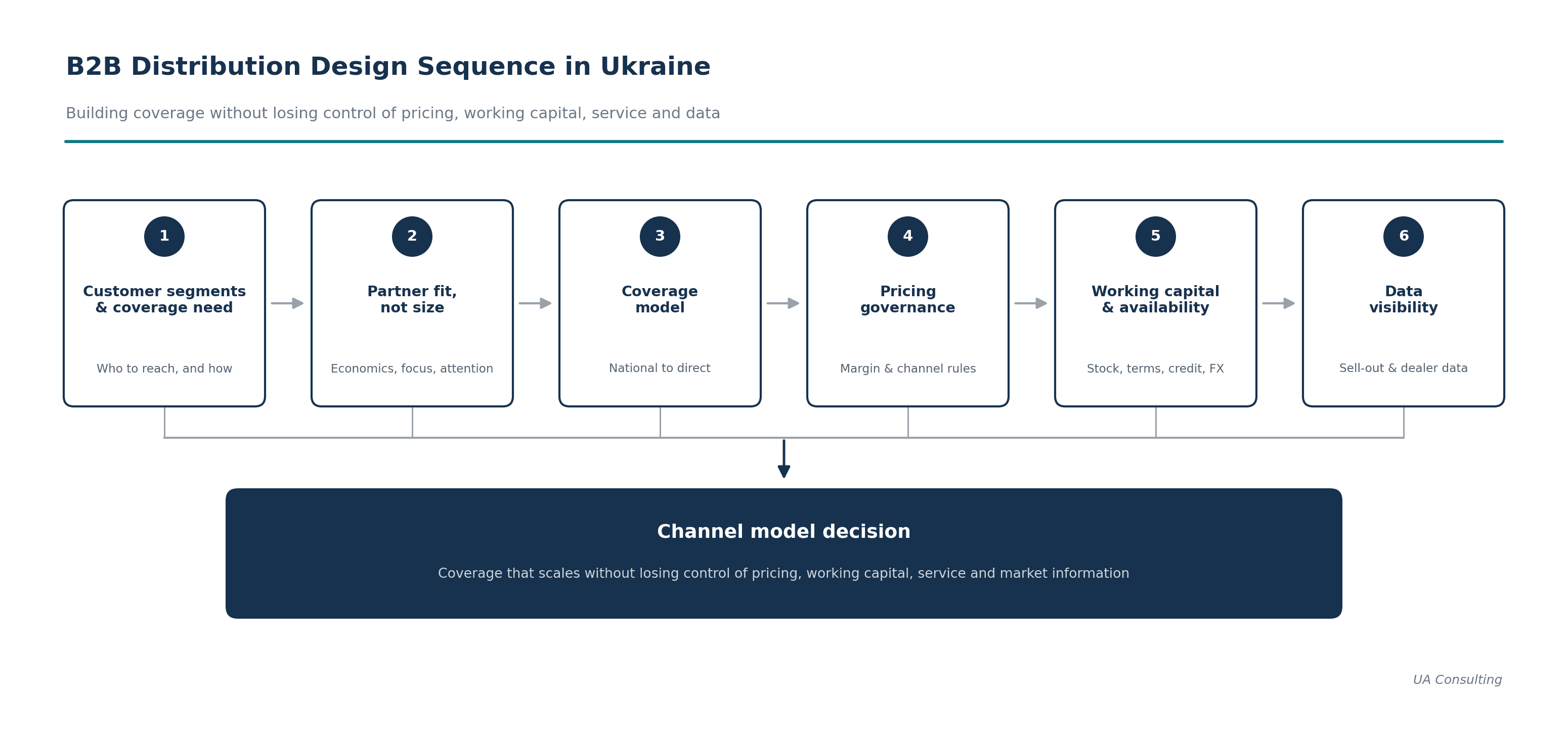
DIAGRAM: B2B Distribution Design Sequence in Ukraine
That discipline tends to have value beyond Ukraine itself. The World Bank's updated Rapid Damage and Needs Assessment identifies transport as the single largest reconstruction need, at more than USD 96 billion, a measure of how strained the operating environment remains. A distribution system built to work under those conditions, with the route flexibility and data discipline they demand, tends to carry over to other difficult and transitional markets.
Channel governance: keeping control after delegation
A well-chosen partner and a sensible coverage model still depend on how the relationship is governed once it is running, and governance is the part most often left vague. The terms that keep a manufacturer in control after delegating the selling are practical rather than legalistic. They settle who owns which territories and accounts, including the larger customers the manufacturer may prefer to keep for itself, and they set the stock a partner must hold, the service standards it must meet and how regularly it reports on sales and prices. Because pricing is where value most easily leaks, a corridor that constrains discounting works better than a fixed price list. Equally important is what happens when performance falls short, which is why the rights to review results against targets, to intervene, and if necessary to end the arrangement, belong in the agreement from the start. Set out early, governance is what later lets a manufacturer correct course without reopening the whole relationship.
Exclusivity belongs in the same framework, as an instrument to use deliberately rather than a concession to grant at the start. Given upfront and unconditionally, it removes a manufacturer's leverage before the partner has proved anything. Handled with more care, it can be staged over time, limited to a region or category, tied to minimum volumes, service standards and reporting, and withdrawn if those conditions are not met. Seen this way, appointing a partner is the last step in a considered sequence rather than the first. By then the manufacturer has already settled which segments to serve directly and which through partners, how roles and margins are set, how working capital and service obligations are shared, and what follows if a partner underperforms. As the work moves from assessing the market into selecting partners and setting terms, it connects naturally with market entry and expansion advisory and the wider commercial questions covered in consumer retail and distribution.
The decision that protects the return
Building B2B distribution in Ukraine is, in the end, an exercise in keeping control inside a developed and competitive market rather than establishing a presence in an empty one. A manufacturer that treats it as finding someone to sell on its behalf tends to gain volume while losing the economics that made growth worthwhile. One that treats it as the deliberate design of coverage, pricing, working capital, service and information, held together by governance, has a far better chance of building a channel that grows without coming apart. The real measure of a Ukrainian distribution model is not whether it can produce a first round of sales. It is whether the manufacturer can keep growing through the channel while holding on to price, service, working capital, customer relationships and its most important accounts.
The choice of route above this decision, between selling directly and selling through partners, is examined in route-to-market strategy in Ukraine, while consumer-facing growth is covered in retail growth and B2C strategy in Ukraine. Once the indirect or hybrid route is chosen, the work described here is what protects the return on it. For manufacturers and exporters building or restructuring B2B distribution in Ukraine, UA Consulting can help test the channel model, define partner roles and identify the risks worth resolving before exclusivity, inventory exposure and customer access are committed to the wrong structure.